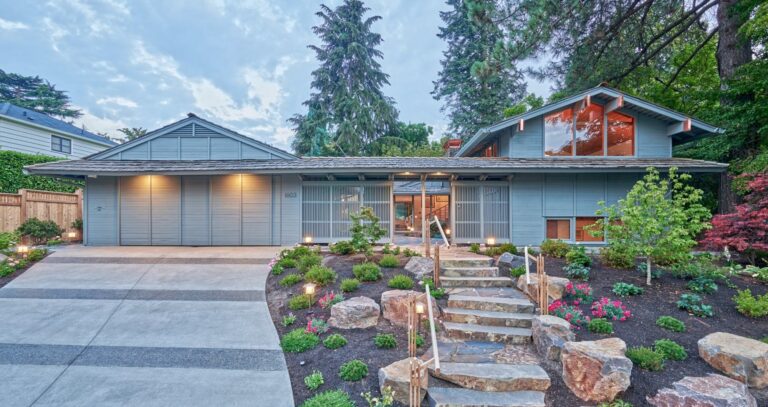
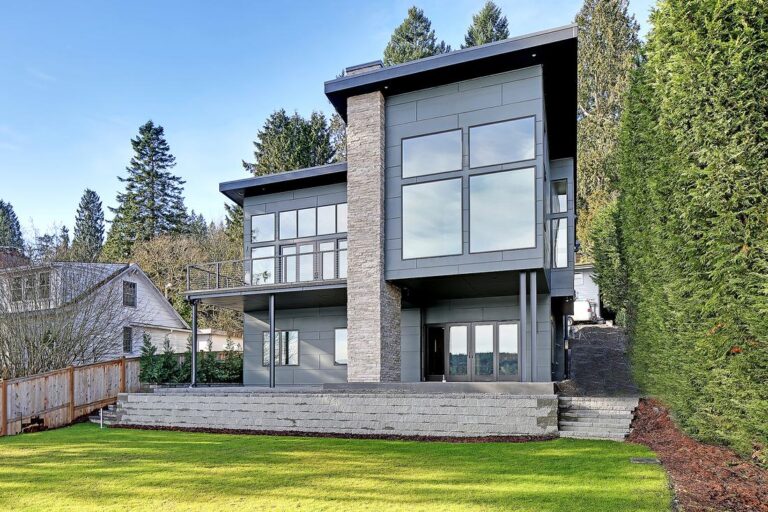
TL;DR: Designing a custom home in Kirkland means working with some of the most complex and rewarding residential lots on the Eastside, waterfront parcels with shoreline setbacks, hillside lots with steep-slope overlays, and tree-covered sites with Critical Areas constraints. David Meade, AIA, NCARB has led custom home projects across Kirkland’s diverse neighborhoods and knows exactly what each site type requires to get from feasibility to permit.
What Makes Kirkland Custom Home Lots Unique
No two Kirkland lots are alike, and that is both the challenge and the appeal of designing custom homes here. Over the years I have worked on sites along Juanita Bay, on the wooded hillsides of Rose Hill, and on flag lots tucked into Bridle Trails, and each one demanded a fundamentally different design approach.
Three lot types in Kirkland require particular expertise:
Waterfront lots on Lake Washington. Kirkland’s lakefront parcels fall under the City’s Shoreline Master Program. That means setbacks measured from the ordinary high water mark (typically 50 feet for single-family residential), limits on impervious surface within the shoreline zone, and sometimes a Shoreline Substantial Development Permit in addition to the standard building permit. Designing on these lots requires a precise understanding of what can be built where, and how to maximize the lake views and indoor-outdoor connection the lot offers while respecting those constraints.
View lots in Rose Hill and Bridle Trails. The elevated terrain east of I-405 puts homes above the tree canopy in ways that capture Cascade views, Olympics views, and Lake Washington views. But that same topography often triggers Kirkland’s steep-slope overlay, any slope greater than 15 percent triggers additional geotechnical review, and slopes over 40 percent are classified as Critical Areas with significant development restrictions. A geotechnical engineer report is typically required early in design to establish where the buildable area actually is.
Hillside lots with grade change. Even lots that do not hit the steep-slope threshold present real complexity when the grade drops 15 or 20 feet across the buildable area. Split-level designs, daylight basements, and stepped foundations all become tools, but they add cost and require careful structural coordination.
The Custom Home Design Process
Here is how I approach a custom home project in Kirkland from first call to permit issuance:
Step 1: Feasibility and Site Analysis
Before you spend money on design, you need to know what you are working with. I review the parcel data, zoning designation (NR-1 through NR-6), King County Assessor records, and any existing surveys. If the site has potential Critical Areas issues, steep slopes, wetlands, streams, or shoreline proximity, I identify those upfront and advise whether a pre-application meeting with Kirkland Development Services is warranted. This step typically takes one to two weeks and saves significant time and money downstream.
Step 2: Schematic Design
Once we understand the site constraints and your program (number of bedrooms, desired square footage, must-have spaces, budget target), I develop schematic design options. For Kirkland lots, this usually means exploring how to orient the home for views and solar access while meeting setbacks and maximizing buildable area within the FAR and lot coverage limits.
Step 3: Design Development and Construction Documents
After schematic design is approved, I develop the full construction document set, architectural drawings, structural engineering coordination, energy compliance (2021 Washington State Energy Code), accessibility, mechanical/electrical/plumbing coordination, and all the details a Kirkland building permit requires.
Step 4: Permit Submission and Review
Kirkland accepts residential building permits through MyBuildingPermit.com. A complete application for a custom home typically includes architectural drawings, structural calculations, energy compliance worksheets, civil and geotechnical reports where required, and arborist reports for tree protection. First-review comments typically come back in four to eight weeks. Complex projects, shoreline permits, Critical Areas, variance requests, can take three to five months for full approval.
Step 5: Construction Administration
Once the permit is issued, I am involved during construction to answer contractor RFIs, review submittals, and make site visits at critical milestones. Custom homes move faster and with fewer surprises when the architect is present at the key moments.
Planning a project?
Working out what your lot will allow, and what it will cost?
Send David the address and a few lines about what you want. The first feasibility check is free and usually takes about a day: what the site and the code are likely to allow, and what to check first.
Architect since 1996. Three Masonry Excellence Awards for commercial projects; the Carr residence was featured in Above The Lake and Lux magazines.
2026 Custom Home Cost Ranges in Kirkland
Construction costs on the Eastside have stabilized somewhat after the volatility of 2021 to 2023, but Kirkland remains a premium market. Based on projects in the current cycle:
| Home Type | Estimated Construction Cost |
|---|---|
| Production-level custom (simpler form, standard finishes) | $550 to $650/sq ft |
| Mid-range custom (custom millwork, quality fixtures, moderate complexity) | $650 to $800/sq ft |
| High-end custom (complex massing, premium finishes, view site) | $800 to $950+/sq ft |
These ranges reflect construction cost only, they do not include architectural fees, permit fees, geotechnical reports, civil engineering, landscaping, or the cost of the land itself. For a complete project budget, add approximately 20 to 25% to the construction cost to account for soft costs and contingency.
Percentage-priced architects for a Kirkland custom home typically charge 8% to 15% of construction cost (Piper Cole quotes a fixed fee), depending on complexity and the level of construction administration required.
Why AIA and NCARB Credentials Matter for a Custom Home
A custom home is the single largest financial commitment most families make. The architect you choose carries professional liability for the design and the construction documents. AIA membership requires adherence to a published code of ethics, client interests come first, always. NCARB certification means my license record is maintained in a national database and subject to ongoing verification.
Beyond the credentials, what matters most in a custom home architect is someone who has designed on lots like yours, who knows how Kirkland’s reviewers approach complex applications, and who will be accessible throughout the 18-to-24-month arc of a custom home project.
That is what I bring to every project.
Related pages:
- Architect in Kirkland, WA
- Second Story Addition Architect, Seattle Eastside
- Bellevue Building Permit Guide 2026
- ADU vs. DADU in King County 2026
Work With Piper Cole Architects
If you are planning a custom home in Kirkland, whether you already own the lot or are still evaluating sites, the right time to talk to an architect is before you commit. I can help you assess a site’s buildable potential, identify constraints that will affect budget, and give you a realistic picture of what your project involves before you spend a dollar on design.
Sources
- City of Kirkland, Development Services, Critical Areas Ordinance and Shoreline Master Program: kirklandwa.gov
- MyBuildingPermit.com, Eastside Regional Permit Portal: mybuildingpermit.com
- Washington State Department of Ecology, Shoreline Management Act
- 2021 Washington State Energy Code (WSEC): sbcc.wa.gov