TL;DR: Architect-led kitchen renovation on the Seattle Eastside ranges from $120,000 to $250,000 for a mid-level remodel with layout changes to $250,000 to $450,000+ for a full expansion. An architect is most valuable when the kitchen touches structure, requires permits, or expands into adjacent space, the complete set of construction documents we provide typically saves clients 10 to 20% in contractor change orders versus verbal-description bids, which often more than covers the architecture fee.
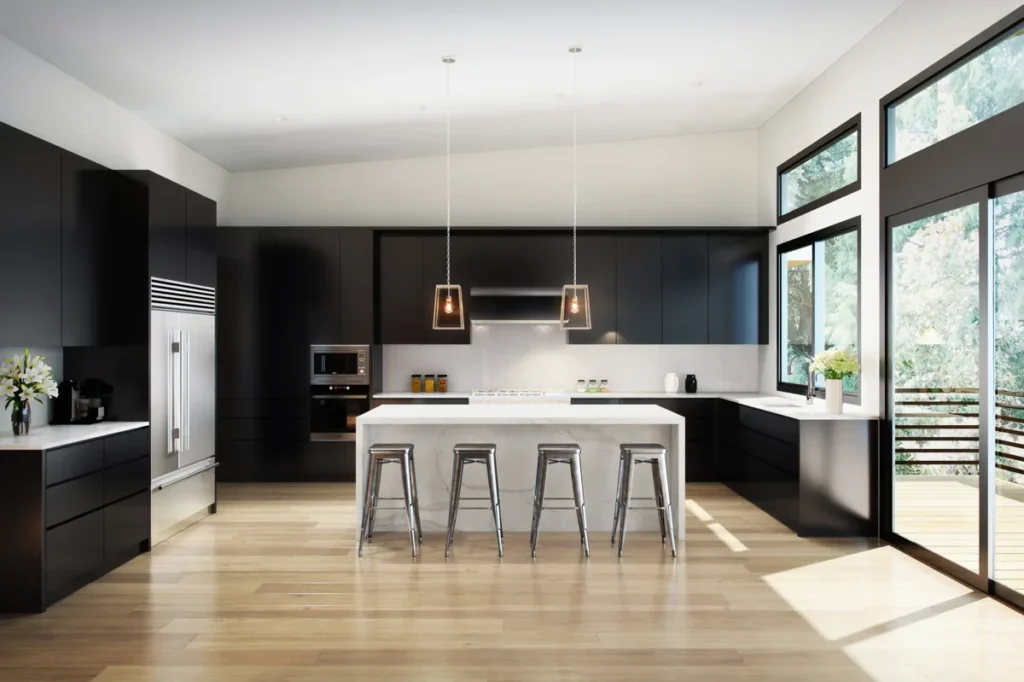
Most kitchen renovations in Kirkland and Bellevue start the same way: a homeowner has lived with a dark, compartmentalized kitchen designed in 1985, they have seen what an open, well-lit kitchen looks like in a renovation magazine, and they want that. The journey from that vision to a finished space involves decisions that range from cabinet hardware to foundation loads, and the path between them is where architects earn their fee.
At Piper Cole Architects, I work on kitchen renovations at every scale, from layout rearrangements that stay within the existing footprint to full kitchen additions that expand the home’s envelope. Here is how I think about the architect’s role in kitchen work, and the cost realities on the Seattle Eastside.
When a Kitchen Renovation Needs an Architect
Not every kitchen renovation requires an architect. Here is my honest breakdown of when professional design adds the most value:
Load-bearing wall removal. This is the most common trigger. Opening a kitchen to an adjacent dining or living room almost always involves removing or modifying a load-bearing wall. As I detail in our guide on open floor plans and load-bearing walls, this work requires structural engineering, a building permit, and stamped drawings in both Seattle and Kirkland. An architect coordinates the structural design with the kitchen layout, making sure the new beam location, ceiling height impact, and column placement work with the desired kitchen configuration.
Gas line relocation. Moving a gas range requires relocating gas piping, which triggers a mechanical permit and coordination with PSE (Puget Sound Energy). On a kitchen expansion that moves an island and the range with it, I coordinate gas routing with the kitchen designer and the contractor in the construction documents so the plumbing rough-in is done once, in the right location.
Structural alterations above the kitchen. Some kitchen remodels want to raise the ceiling, vaulting a flat ceiling to follow the roof slope above. This is a structural project: removing ceiling joists, adding a ridge beam, and potentially redesigning the lateral resistance of the roof. These changes require an architect or structural engineer’s stamp and a building permit.
Expanding into adjacent space. When a kitchen remodel pushes into a breakfast room, a garage, or an unused bedroom, the project becomes an addition with all the permit complexity that entails: zoning compliance, energy code for the new conditioned space, and possible setback review.
Seattle’s Substantial Improvement Rule. In City of Seattle, renovations that exceed 50% of a building’s assessed value require the entire structure to be brought up to current code, including seismic, energy, and accessibility. For high-value kitchens in older homes, checking the substantial improvement threshold before starting design is an important step that I handle as part of programming.
The Architect’s Role vs. GC vs. Kitchen Designer
On a typical Eastside kitchen renovation, three professionals may be involved, and their roles are frequently misunderstood:
Kitchen designer. A kitchen designer (AKBD or CKD certification) specializes in cabinet selection, storage optimization, material finishes, appliance specifications, and spatial planning within an established footprint. Kitchen designers are excellent at what they do, but they do not stamp drawings for permit, do not coordinate structural systems, and do not manage construction administration.
General contractor (GC). A GC manages the construction process, hiring subcontractors, scheduling trades, procuring materials, and maintaining the project budget and schedule. A GC who is also a design-build firm may offer design services, but those services are typically not stamped by a licensed architect and may not include the coordination depth needed for complex kitchens.
Architect. I coordinate all of these parties. On a kitchen project, I develop the programming (what do you cook, how many people cook simultaneously, where does the recycling go), the schematic layout (which walls move, where the island lands, how the sightlines work), the design development (ceiling height, window placement, lighting zones), and the construction documents (the full permit-ready drawing set that every contractor bids from the same information). During construction administration, I review shop drawings, answer RFIs, conduct site visits, and verify that what is being built matches what was designed.
When contractors bid from complete construction documents, their bids are comparable, the scope is defined and the details are resolved. When contractors bid from a verbal description or a kitchen designer’s sketch, each contractor makes different assumptions about what is included. The resulting change orders, when the contractor’s assumptions turn out to be different from yours, typically run 10 to 20% of project cost. On a $200,000 kitchen renovation, that is $20,000 to $40,000 in surprises.
Planning a project?
Planning a remodel of your own?
Send David the address and a few lines about what you want. The first feasibility check is free and usually takes about a day: what the site and the code are likely to allow, and what to check first.
Architect since 1996. Three Masonry Excellence Awards for commercial projects; the Carr residence was featured in Above The Lake and Lux magazines.
Kitchen Renovation Cost Ranges on the Seattle Eastside
I want to give you real numbers that reflect current market conditions in Kirkland, Bellevue, and Seattle, because the ranges published in national home improvement guides are not applicable to the Pacific Northwest market.
Cosmetic refresh (no layout change, no permits): $60,000 to $120,000. This covers new cabinet faces or full cabinet replacement within existing footprint, new countertops, new appliances, new lighting fixtures, and a new backsplash. No structural work, no permits required in most jurisdictions, and no architect required, a kitchen designer and a good GC can execute this work well.
Mid-level remodel with layout change: $120,000 to $250,000. This scope moves the island, relocates plumbing, removes or modifies a wall, or reroutes gas. It requires a building permit in Seattle and Kirkland, structural drawings if any walls are modified, and the coordination that makes an architect valuable. New cabinets, full countertop replacement, new appliances, lighting design, and floor patching are typically included.
Full architect-led expansion: $250,000 to $450,000+. This scope expands the kitchen footprint, bumping out into an addition, absorbing an adjacent room, or raising the roofline above. It includes all the permitting complexity of an addition: zoning review, energy code compliance for the new conditioned area, possible setback review, and structural engineering for the new foundation. Complete kitchen design, high-specification materials, and custom cabinetry are typically part of this scope.
For a full kitchen remodel in Kirkland where we are engaged from the start of programming through construction administration, our architecture fee runs approximately 8 to 12% of construction cost.
Our Process: Programming Through Construction Administration
Every architect-led kitchen renovation at Piper Cole follows the same sequence of phases. Here is what each one delivers:
Programming. Before sketching a line, I sit with you and document how you use your kitchen: cooking style, number of simultaneous cooks, storage priorities, appliance preferences, entertaining patterns. The programming phase catches conflicts before they become design changes.
Schematic Design. Two or three layout options showing wall configurations, island placement, major appliance locations, and window treatments. We discuss the tradeoffs of each option, sight lines, traffic flow, storage access, structural implications, and converge on a preferred direction.
Design Development. One resolved design developed in detail: ceiling heights, window sizes, lighting zones, material palette, cabinet layout, plumbing fixture locations, and structural coordination. At the end of this phase, you know exactly what you are building.
Construction Documents. The full permit-ready drawing set: floor plans, reflected ceiling plans, elevations, sections, details, schedules, and structural drawings. These are the documents every contractor bids from and builds from. Completeness here is everything.
Contractor Selection. I assist with the RFP process, review bids for scope completeness, interview candidate contractors, and help you evaluate qualifications beyond just price.
Construction Administration. I visit the site at critical milestones, review submittals and shop drawings, respond to contractor RFIs, and manage the punch list at project close. CA is where design intent gets translated into built reality, and where an architect’s presence prevents the expensive surprises.
For a kitchen addition that expands the building envelope, the process adds a zoning review step in programming and a Kirkland or Seattle DCI permit submission between design development and construction documents.
Permit Triggers by Jurisdiction
Seattle, Kirkland, and Bellevue handle kitchen renovation permits slightly differently:
City of Seattle (DCI): A permit is required for any structural work (wall removal, ceiling modification, beam installation), electrical panel upgrades or new circuit additions, and gas line relocation. A cosmetic kitchen renovation that does not touch structure, does not add circuits beyond an existing panel capacity, and does not move gas or drain lines typically does not require a permit in Seattle. However, substantial improvement rule checks are advisable for older homes.
City of Kirkland (MyBuildingPermit.com): Similar permit triggers to Seattle. Kirkland requires a permit for structural modifications, gas line work, and new electrical circuits. Kirkland’s over-the-counter permit review is available for simple structural alterations; more complex projects go through standard plan review with 6 to 10 week timelines.
City of Bellevue: Bellevue requires permits for structural work and significant MEP changes. Bellevue’s permit review for residential work currently runs 4 to 8 weeks. As your Bellevue area architect, I prepare submittals tailored to Bellevue’s checklist requirements.
What Buyers’ Inspectors Flag on Kitchen Remodels Done Without Permits
This comes up in transactions every month in the Eastside market. Pre-purchase inspectors look for: mismatched flooring where walls were removed, electrical work without permit stickers on the panel, gas connections that do not match permitted drawings, and plumbing work with non-code materials or connections. When an inspector flags unpermitted kitchen work, the buyer can demand repair, price reduction, or retroactive permitting, all of which are expensive for the seller.
The cost of permitting a kitchen renovation correctly is $600 to $2,000 in fees. The cost of retroactive permitting, opening walls, engineering assessment, correcting deficiencies, then re-closing, can run $15,000 to $50,000. The permit is a good investment.
If you are planning a kitchen renovation in the Seattle area and want to understand the full scope of what an architect-led process delivers, contact Piper Cole Architects to schedule a consultation. We serve homeowners across Kirkland, Bellevue, Redmond, and the broader Seattle Eastside residential market.
Work With Piper Cole Architects
A kitchen renovation is one of the highest-impact investments you can make in your Eastside home, and one of the most complex to execute well. At Piper Cole Architects, we bring the technical rigor and design sensibility to make sure your kitchen is beautiful, functional, and built without the change orders that derail budgets.
425-753-6452 | Kirkland, WA | Serving the Seattle Eastside
Sources
- City of Seattle Department of Construction and Inspections. Kitchen Renovation Permit Guide. seattle.gov/sdci.
- City of Kirkland Development Services. Residential Permit Fee Schedule 2025. kirklandwa.gov.
- National Kitchen & Bath Association (NKBA). Kitchen & Bath Market Index 2024. nkba.org.
- American Institute of Architects. Residential Architect Services: Scope and Fee Guide. aia.org.