
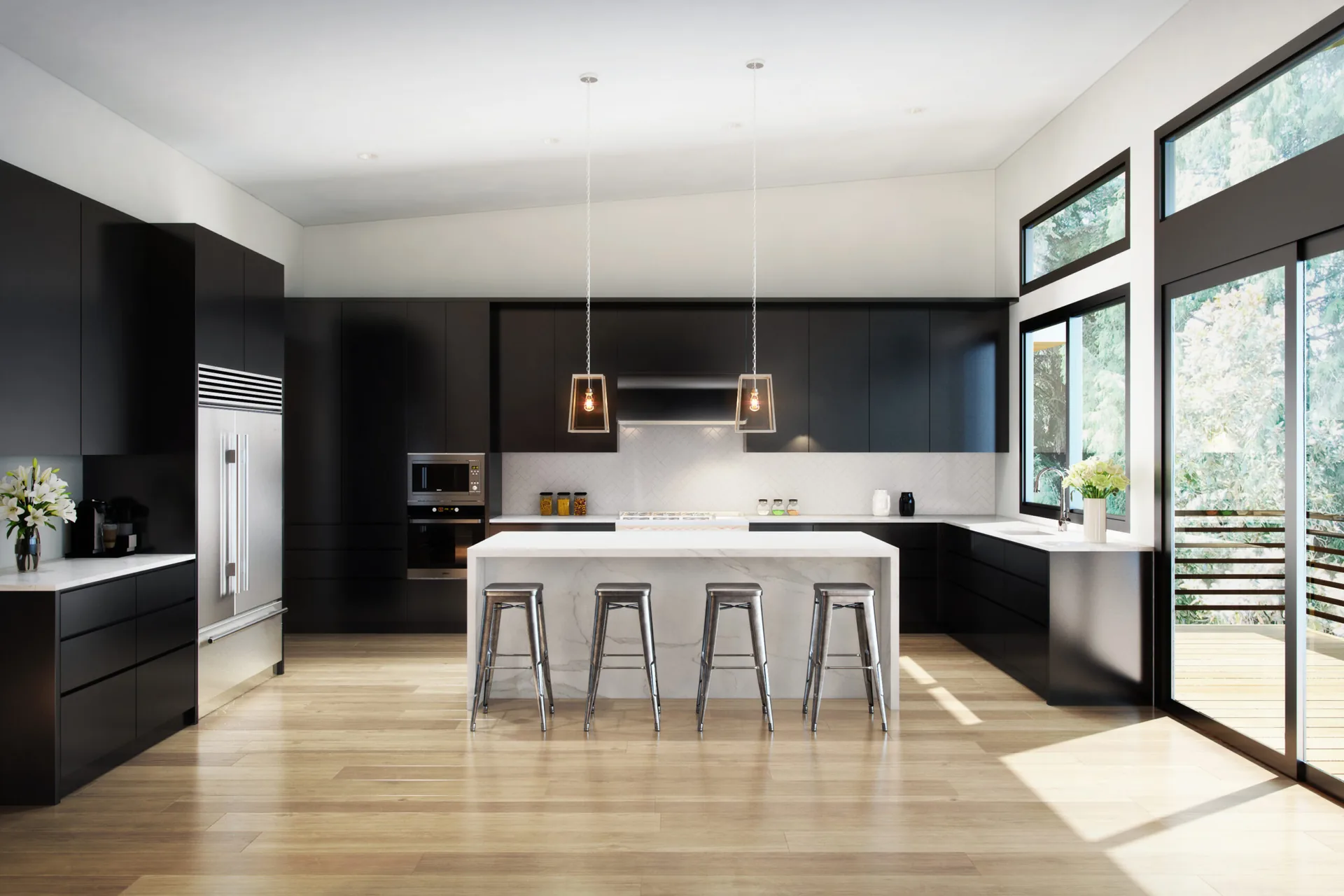
Whole house remodels, Seattle and the Eastside
What a Whole House Remodel Costs Here
$300 to $550 per square foot in 2026, which puts most Eastside whole house remodels between $400,000 and $1.1M. National calculators are short by 20 to 35% in this market, and here is exactly why.
The first feasibility check is free.
Free feasibility check
Send the address and what you have in mind. David replies within one business day with what the site and the code are likely to allow.
- 1996Licensed architect since 1996
- 1992AIA member since 1992
- 20 to 30Projects designed each year
- 3Masonry Excellence Awards
- AIAAIA · NCARB · Washington licensed
Why local numbers matter
A national remodel calculator will underprice this by a third
I have designed whole house remodels in Enatai, Somerset, Lake Hills, Newport Hills and Factoria, and across Kirkland, Redmond and Sammamish. The Eastside is a poor candidate for generic regional pricing for three specific reasons.
The cities apply the Substantial Improvement rule at a lower threshold than most homeowners expect, which triggers full code compliance mid project. The housing stock is heavily concentrated in the 1960s to 1980s, which carries predictable and expensive hidden costs. And 37 inches of annual rainfall makes the sequencing decision architecturally significant in a way it simply is not in drier markets.
If you are working from a national cost calculator, your budget is probably short by 20 to 35%.
Estimate
Estimate your whole house remodel
Set your house size and how deep the remodel goes. The per square foot figures are the same ones in the depth table below, so the estimator never quotes something this page does not already stand behind.
A planning range for construction, not a quote. Soft costs, meaning design, engineering, permits and consultants, add another 15% to 30% on top. Call David on 425 753 6452 to talk about your own house and which code triggers apply to it.
Projects
Selected work
Real houses, real constraints. Photographs and drawings from the practice.
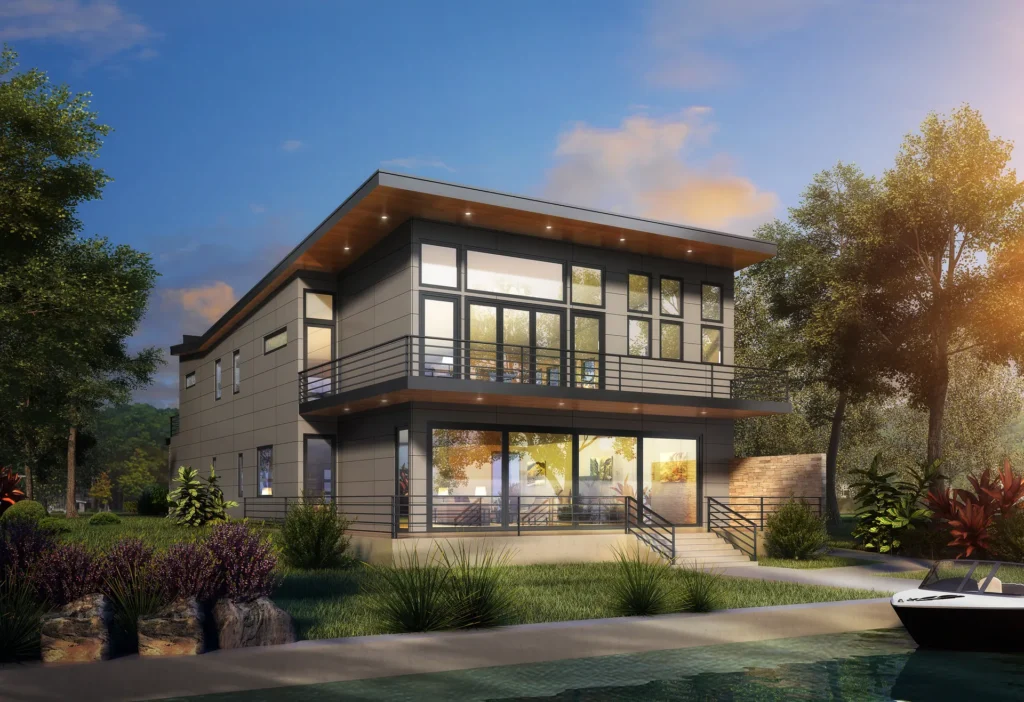
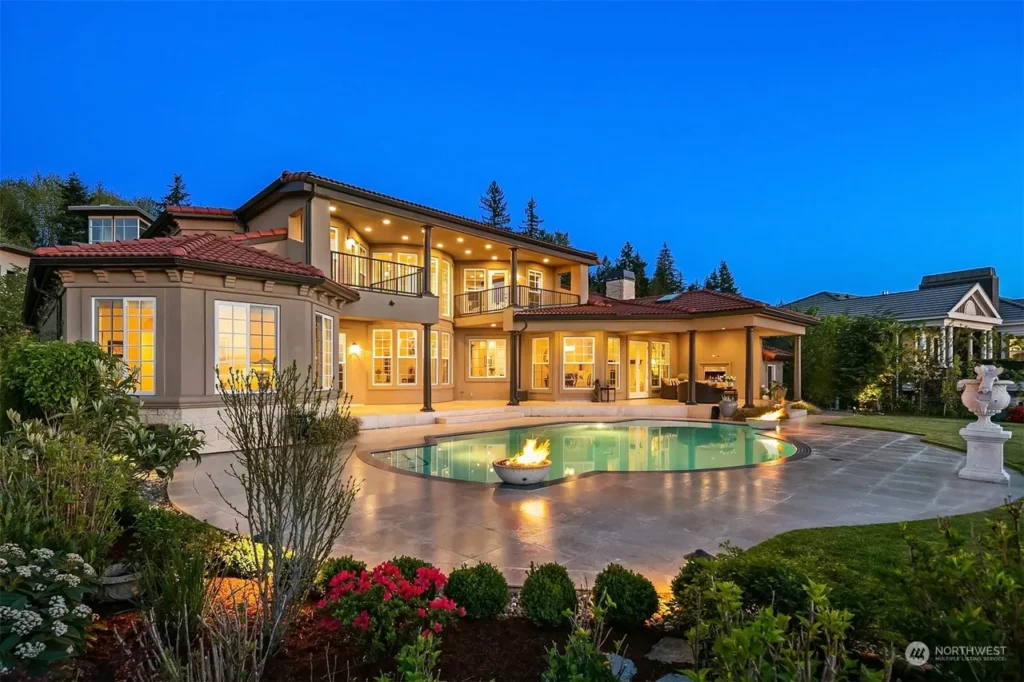
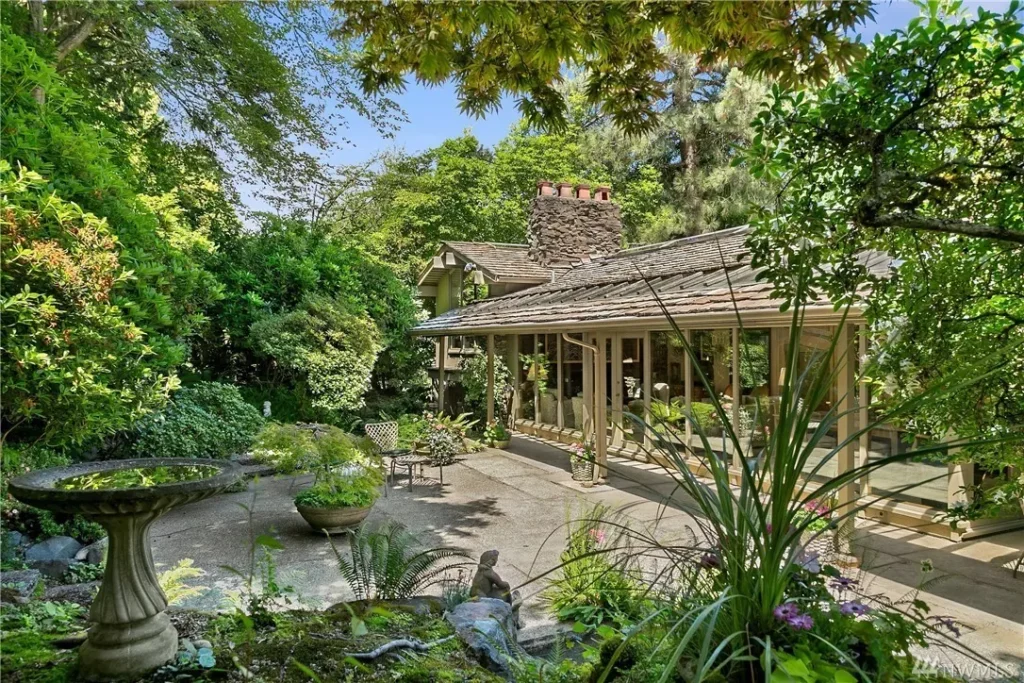
The numbers
Whole house remodel cost by depth, 2026
One thing in this table surprises people: studs out can land below a mid range renovation per square foot. You start from zero, so there are no surprises left inside the walls to pay for.
| Remodel depth | Cost per sq ft | What is included |
|---|---|---|
| Cosmetic refresh | $150 to $300 | Paint, flooring, fixtures, cabinet refacing, nothing structural |
| Mid range renovation | $300 to $450 | Kitchen and bath gut, new windows, HVAC replacement, some structural |
| Studs out gut renovation | $275 to $350 and up | Full interior demolition, new MEP rough in, new insulation, new drywall |
| High end with full systems | $450 to $550 and up | Premium finishes, full MEP replacement, structural work, fire sprinklers |
Swipe the table sideways to see every column
Construction cost only. Soft costs add 15% to 30%. A 1,140 sq ft single story runs $399,000 to $570,000 all in at mid to high end. A 2,400 sq ft two story runs $700,000 to $1.1M.
The trap
The Substantial Improvement rule, and why it moves your budget
Every Eastside city applies a substantial improvement threshold. Cross it and the project stops being a remodel in the code’s eyes and becomes something closer to new construction, which means full current code compliance across the whole house.
Bellevue interprets it strictly and triggers at a lower threshold than most homeowners expect. The consequence is not a fine, it is scope: energy code across every assembly, seismic requirements, sometimes fire sprinklers, on a house you only meant to renovate.
This is knowable before you design anything. It is also the single most common reason an Eastside remodel budget moves by six figures after work has started. Ask about it in the first meeting, whoever you hire.
The housing stock
1960s to 1980s homes carry predictable hidden costs
Most of the Eastside’s remodel candidates were built between the 1960s and the 1980s. That vintage is consistent enough that the surprises are not really surprises, they are just things nobody looked for before demolition day.
- Knob and tube or early aluminum wiring needing full replacement
- Galvanised supply lines at end of life
- Insulation well below current code in walls, floors and roof
- Asbestos in floor tile, mastic, popcorn ceilings and pipe wrap
- Single pane aluminum windows with no thermal break
- Undersized or absent seismic connections between the frame and the foundation
- Original panels without capacity for a heat pump or an EV charger
Sequencing
Why the wet season changes the design decision
The Eastside takes 37 inches of rain a year. On a whole house remodel that turns sequencing from a construction preference into an architectural decision.
Exterior first sequencing gets the envelope closed before the wet months, which protects the interior work and keeps the schedule honest. It also changes what gets drawn first and how the permit set is organized.
Get the sequence wrong and you are either paying for temporary weather protection or watching finished interior work sit exposed. Neither is in anybody’s original budget.
Soft costs
Budget 15% to 30% on top of construction
The construction number is not the project number. On a whole house remodel, soft costs run 15% to 30% of construction depending on complexity and jurisdiction.
That covers architecture, structural engineering, energy compliance, permits and city fees, any geotechnical or environmental review, and the consultants a complicated house needs. On a $620,000 remodel that is roughly $93,000 to $186,000 more.
It is not optional and it is not padding. It is the part of the project that decides whether the construction money gets spent well.
Questions
Whole house remodels, answered
Not answered here? Call David, most calls are answered the same day.
How much does a whole house remodel cost in Seattle and Bellevue?
$300 to $550 and up per square foot in 2026 depending on depth. A 1,140 sq ft single story runs $399,000 to $570,000 all in for mid to high end. A 2,400 sq ft two story runs $700,000 to $1.1M. Soft costs add 15% to 30% on top.
Why are Eastside remodel costs higher than national figures?
Three reasons: the cities apply the Substantial Improvement rule at a lower threshold than most people expect, the 1960s to 1980s housing stock carries predictable hidden costs, and 37 inches of annual rain makes sequencing a real cost factor. Expect national calculators to be short by 20 to 35%.
Is a studs out renovation more expensive than a mid range one?
Not always per square foot. Studs out runs $275 to $350 and up, mid range runs $300 to $450. Starting from zero removes the unknowns inside the walls, and unknowns are what make mid range projects overrun.
What is the Substantial Improvement rule?
A threshold where a remodel triggers full current code compliance across the whole house rather than just the work being done. It can add energy code upgrades, seismic work and sometimes fire sprinklers. It is knowable before design starts and it is the most common cause of a six figure budget change.
Should I remodel or tear down and rebuild?
It depends on how much of the existing structure survives the remodel and whether the Substantial Improvement threshold is crossed anyway. If a studs out renovation is already triggering full code compliance, the rebuild comparison is worth running properly before you commit.
What do architect fees add to a whole house remodel?
I quote a fixed fee for design and permit, set by the project budget and location; most fall between $10,000 and $200,000 depending on scope. Engineering, permits and consultants make up the rest of the 15% to 30% soft cost band. There is a calculator for your own budget on the architect fees page.
Keep reading
The rest of the remodel picture
- Architect fees in SeattleWhat the design work costs, with a calculator for your own budget
- Second story addition cost in SeattleWhen the remodel wants to go up as well as through
- Home remodel, addition or new buildThe comparison worth running before you commit to any of them
- Cost to build a house in SeattleThe rebuild side of the teardown comparison, per square foot
- Bellevue building permit guideHow Bellevue runs its permit tracks and what that costs in time
- Seattle building permit guideThe Seattle process, review times and fees
Keep reading
Related guides
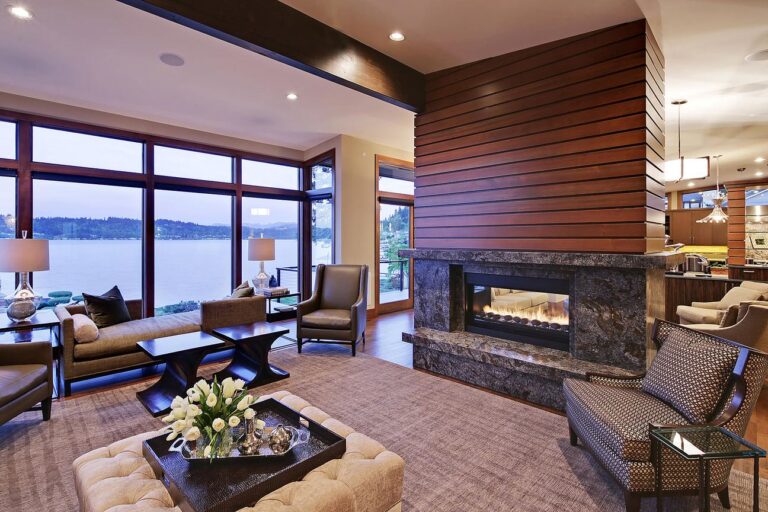
Hiring a waterfront home architect on Lake Washington or Lake Sammamish: what to check before you sign
Hiring a waterfront home architect on Lake Washington? Shoreline rules decide your design first. Free one-day feasibility check, fixed design fee.
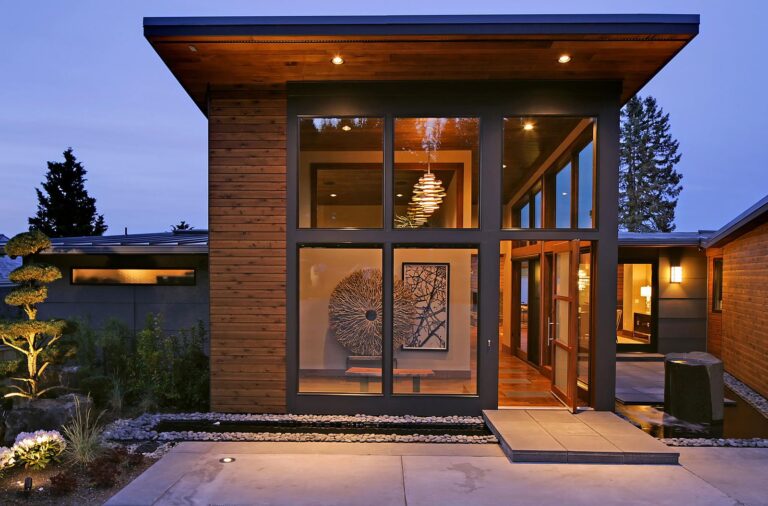
Whole house remodel architect in Bellevue, WA
Planning a $750,000+ remodel in Bellevue? Fixed-fee architect who knows the city’s remodel rules. Start with a free feasibility check, usually about a day.
Whole house remodel architect in Medina, Washington
Whole house remodel architect for Medina, WA homes from $750,000. Free one-day feasibility check, then a fixed design fee. Call David Meade.
Next step
Find out which code triggers apply to your house
The Substantial Improvement question decides your budget, and it is answerable before anything gets drawn. Call David Meade directly. The first feasibility check is free and usually takes about a day, and you will get a straight answer about your own address.
Free feasibility check
Send the address and what you have in mind. David replies within one business day with what the site and the code are likely to allow.