Now covered in more depth
Now covered in more depth
Woodinville occupies a rare position on the Eastside. It has the feel of somewhere genuinely rural, winding roads through forested lots, morning mist over the Sammamish River valley, the quiet authority of wine country, yet you can reach the Redmond or Kirkland tech corridor in roughly twenty minutes. That combination is exactly why so many of our clients end up here. They want design quality, generous land, and room to build something that actually fits the way they live. They just don’t want to give up proximity to everything.
I’ve worked on projects throughout the Northshore Eastside, and Woodinville lots tend to reward architects who pay attention. Larger parcels, mature tree canopies, wetland buffers, and rural agricultural character all shape what’s possible, and what’s worth doing. This page explains what we do in Woodinville, what’s changed in 2026 for rural property owners, and how the permitting process actually works here.
What We Design in Woodinville
The range of projects in Woodinville is broader than most people expect. Here’s what we work on most often.
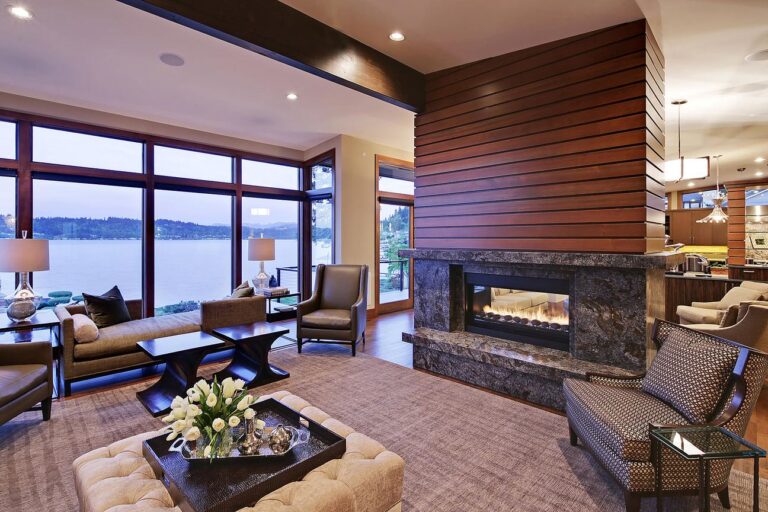
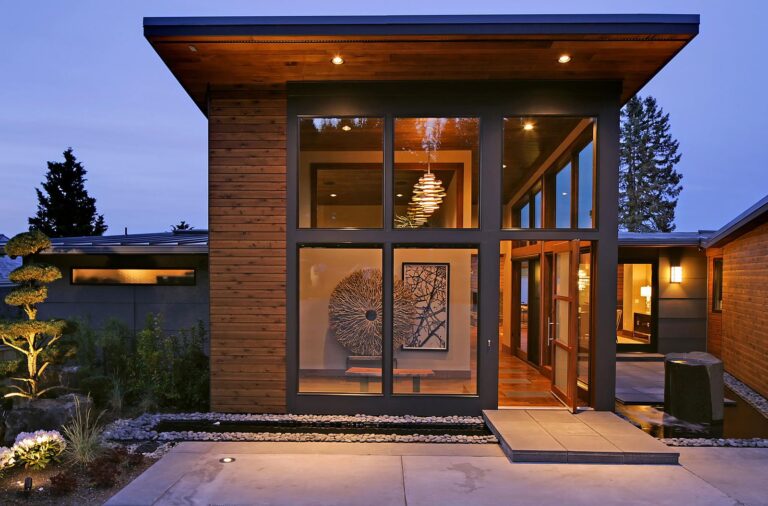
Custom homes on large lots. Woodinville parcels frequently run from half an acre to several acres, and that land demands a different design approach than an urban infill lot. Approach drives, building orientation relative to mature trees, view corridors toward the Sammamish River valley or the Cascades, garage placement, septic setbacks, all of this shapes the design before we draw a single wall. Our custom home design services are built around site-first thinking, which is exactly what larger rural and semi-rural lots require.
Construction costs in Woodinville for a fully custom home in 2026 typically run $400 to $750 per square foot depending on finish level, structural complexity, and site conditions. Rural lots can run lower than urban Eastside comparables because land costs are absorbed differently, but homeowners on rural parcels often elect larger, more feature-rich builds, so total project budgets are frequently significant. If you want to understand how architect fees fit into that picture, our post on how much does an architect cost in Seattle gives a detailed breakdown.
Additions on established properties. Woodinville has a large stock of homes built in the 1980s and 1990s that are structurally solid but functionally outdated, low ceilings, closed floor plans, undersized kitchens. A well-designed addition can transform one of these homes without the cost of a teardown. Our home additions work starts with an honest assessment of what the existing structure can support and what the lot regulations allow.
ADUs and accessory structures. Detached accessory dwelling units, guest quarters, studio spaces, and agricultural accessory structures are all common in Woodinville’s rural character zones. For rural property owners specifically, 2026 brings a major change, which I’ll explain in the next section.
Winery and estate accessory buildings. Woodinville is home to more than 100 wineries and tasting rooms, and the surrounding agricultural land supports working estates with barn structures, equipment storage, and tasting facilities. These projects require careful navigation of agricultural zoning, King County design standards, and occasionally state liquor authority requirements.
The Big 2026 Change: Rural ADUs Now Allowed Under HB 1345
If you own rural property in or around Woodinville, this is the most important policy change in years, and most property owners don’t know it happened yet.
Washington HB 1345 took effect on June 11, 2026. It authorizes accessory dwelling units on rural-zoned parcels statewide, a category that was previously excluded from ADU rights in most jurisdictions. Before HB 1345, ADU allowances in Washington were largely limited to urban and suburban zoned land within Urban Growth Areas. Rural parcels, including the large-lot rural residential and agricultural zones that make up much of Woodinville’s eastern and northern areas outside the incorporated city boundary, were generally off-limits for attached or detached ADUs.
That’s changed. Woodinville’s rural-adjacent parcels, particularly those in unincorporated King County outside the UGA, are exactly the land HB 1345 was designed to serve. If you have a five-acre rural residential parcel with an older home and you’ve been told an ADU wasn’t possible, it’s worth a fresh conversation.
The practical details matter enormously here. HB 1345 sets a baseline, but local jurisdictions retain authority over setbacks, maximum ADU size, design standards, and critical areas regulations. King County’s critical areas ordinance applies to wetlands and steep slopes, which appear on many Woodinville rural lots. Siting a rural ADU requires a licensed architect who understands both the new state law and the local overlay regulations.
Our ADU design services now include rural ADU feasibility assessments for HB 1345-eligible parcels. We can review your parcel’s zoning designation, identify any critical areas constraints, and tell you whether an ADU pencils out before you commit to a full design engagement.
For a deeper look at how Washington’s ADU law changes affect Eastside homeowners, see our post on Washington ADU laws 2026 Eastside.
Planning a project?
Working out what your lot will allow, and what it will cost?
Send David the address and a few lines about what you want. The first feasibility check is free and usually takes about a day: what the site and the code are likely to allow, and what to check first.
Architect since 1996. Three Masonry Excellence Awards for commercial projects; the Carr residence was featured in Above The Lake and Lux magazines.
Woodinville’s Permitting Landscape
One question I hear constantly from Woodinville homeowners: “Who actually issues my permit?” The answer depends on where your parcel sits.
City of Woodinville (incorporated city limits). If your property falls within the incorporated city boundary, permits are issued by the City of Woodinville Building Division. The city has invested in streamlining its residential permit process in recent years. For a straightforward addition or ADU, typical review timelines run approximately 8 to 12 weeks from a complete application submission.
Unincorporated King County (outside city limits). Many Woodinville addresses are actually unincorporated King County, served by the King County Department of Permitting and Environmental Review (DPER). DPER handles a high volume of permit applications across the county, and residential project timelines there typically run 10 to 16 weeks from complete application, sometimes longer for projects involving critical areas review, shoreline permits, or variance requests.
The distinction matters for project scheduling. If you’re planning construction for a specific season, we need to back-calculate from your target start date through the permit timeline and into the design and documentation phase. A project targeting a spring 2027 construction start should ideally be in design by late 2026.
It’s also worth noting that Woodinville is an area of ongoing jurisdictional evolution. Portions of the surrounding area have been subject to annexation discussions and UGA boundary amendments under King County’s Comprehensive Plan updates. If your parcel is near the UGA boundary, its regulatory status is worth confirming directly before you assume which jurisdiction applies.
A complete permit application package for a custom home or ADU in either jurisdiction will include architectural drawings, structural calculations, energy code compliance documentation, and civil/site work. For rural parcels, a geotechnical report and a critical areas review are frequently required before design can be finalized.
Design on Rural and Large Lots
I want to say something directly about how we approach design on Woodinville’s larger parcels, because it’s different from urban residential work in ways that matter to homeowners.
The Sammamish River valley creates a distinct micro-landscape through Woodinville. Lots on or near the valley floor can have wetland buffers that affect buildable area significantly. Tree-covered slopes require careful attention to root zones, drainage patterns, and fire code setbacks. Rural parcels often have well and septic systems that constrain where a primary structure and an ADU can both sit.
None of these are obstacles, they’re design parameters. The best rural homes in Woodinville work with the land rather than ignoring it. A long approach drive through mature Doug firs is a feature worth preserving, not a problem to solve. A building that steps with the topography instead of fighting it often costs less to build and looks like it belongs.
We spend significant time on site analysis before beginning schematic design, reviewing survey data, walking the parcel, mapping the natural drainage and canopy cover, and understanding how the home will be experienced from the road, the garden, and the interior. That work shows up in the final design.
If you’re evaluating architects for a Woodinville project, I’d encourage you to ask any candidate how they approach site analysis on large lots and what specific experience they have with rural King County permitting. The answers will tell you a great deal.
Frequently Asked Questions
Can I build an ADU on my rural Woodinville property in 2026?
Yes, in many cases. Washington HB 1345, effective June 11, 2026, now allows ADUs on rural-zoned parcels statewide. If your Woodinville property is zoned rural residential or agricultural and falls outside the Urban Growth Area, you may be eligible to add an attached or detached ADU. Local setback, size, and critical areas regulations still apply, and a site-specific feasibility review is the right first step. Contact us for a free feasibility check to assess your parcel.
Who handles building permits in Woodinville, WA?
It depends on your parcel’s location. Properties within the incorporated City of Woodinville are permitted through the City of Woodinville Building Division (typical timeline: 8 to 12 weeks). Properties in unincorporated King County, which includes many rural Woodinville addresses, are permitted through King County DPER (typical timeline: 10 to 16 weeks). Your tax parcel address and zoning designation will confirm which jurisdiction applies.
What does a custom home architect cost in Woodinville?
Architectural fees for a custom home in Woodinville typically range from 8% to 15% of construction cost, depending on project scope, site complexity, and service level. On a $1.2M custom home, that translates to roughly $96,000 to $180,000 in architectural fees. Rural lots with complex sites or critical areas tend to sit at the higher end of that range due to the additional documentation required. See our detailed breakdown of how much does an architect cost in Seattle for a full explanation of fee structures.
Does Piper Cole Architects work in Woodinville?
Yes. We design custom homes, additions, ADUs, and accessory structures throughout Woodinville and the broader Northshore Eastside, including Bothell, Kenmore, Kirkland, and surrounding unincorporated King County. David Meade, AIA, NCARB leads all project work. Contact us for a free feasibility check to discuss your Woodinville project.