
📄 Table of Contents
- Seattle’s ADU Opportunity Is Real — And We Can Help You Capture It
- Seattle ADU Regulations: What You Need to Know in 2026
- ADU Types We Design and Their Permit Timelines
- 2026 ADU Cost Ranges in Seattle
- What Does ADU Rental Income Look Like in Seattle?
- ADU Financing Options
- David Meade’s ADU Design Process
- Seattle Neighborhoods Where ADUs Add the Most Value
- HB 1337 and What It Changed for Seattle ADUs
- Frequently Asked Questions
- Work With Piper Cole Architects
- Sources
TL;DR: Seattle is one of the most ADU-friendly cities in the country — two ADUs per lot, no owner-occupancy requirement, no parking minimum near transit. Piper Cole Architects designs DADUs ($260K–$480K), AADUs ($80K–$180K), and garage conversions ($90K–$220K) with full permit management through SDCI. Call David Meade AIA at 425-753-6452.
Seattle’s ADU Opportunity Is Real — And We Can Help You Capture It
Seattle has quietly become one of the best cities in the nation to add an ADU. The policy landscape shifted dramatically between 2019 and 2023: two ADUs are now permitted on most single-family lots, the owner-occupancy requirement was eliminated, and parking isn’t required for units within half a mile of a transit stop. That covers the majority of Seattle’s residential neighborhoods.
What hasn’t changed is that building an ADU well — one that functions properly, passes inspection without costly rework, and adds genuine resale value — requires a design professional who understands both architecture and Seattle’s specific regulations. That’s where Piper Cole Architects comes in.
I’m David Meade, AIA, NCARB, and ADU design is one of the most requested services at our firm. We’ve navigated SDCI’s permit process, understand the code quirks that trip up inexperienced designers, and know how to maximize livable square footage on tight Seattle lots.
Seattle ADU Regulations: What You Need to Know in 2026
Understanding Seattle’s rules before you design anything saves significant money. Here are the critical parameters:
How many ADUs can I build?
Seattle allows two ADUs per lot: one detached ADU (DADU — a backyard cottage or new structure) and one attached or accessory dwelling unit (AADU — basement unit, garage conversion, or addition). Both can be rented simultaneously.
Do I have to live on the property?
No. Seattle eliminated its owner-occupancy requirement in 2023. You can rent both your primary home and both ADUs simultaneously if you choose.
Is parking required?
Not for ADUs located within 0.5 miles of frequent transit service — which covers a large portion of Seattle neighborhoods, including Ballard, Capitol Hill, Fremont, Columbia City, Beacon Hill, and West Seattle. For properties farther from transit, one space may be required. We check this at the beginning of every project.
Size limits for DADUs:
Seattle allows DADUs up to 1,000 square feet or 60% of the primary home’s square footage, whichever is less. Height is limited to 24 feet (or 18 feet in some rear yard configurations). Setbacks of 5 feet from side and rear property lines apply.
Rental registration:
If you rent any ADU in Seattle, the unit must be registered with the city’s Rental Registration and Inspection Ordinance (RRIO) program and pass a periodic inspection.
ADU Types We Design and Their Permit Timelines
| ADU Type | Description | Estimated Permit Timeline |
|---|---|---|
| DADU (backyard cottage) | New detached structure in rear yard | 6–8 months (full review) |
| AADU — basement conversion | Existing basement converted to dwelling | 4–6 months |
| AADU — garage conversion | Attached or detached garage converted | 5–7 months |
| AADU — addition | New attached addition with separate entrance | 5–7 months |
These are estimates based on current SDCI processing. Projects that trigger Streamlined Review may move faster. Incomplete applications reset the clock — another reason professional drawings matter.
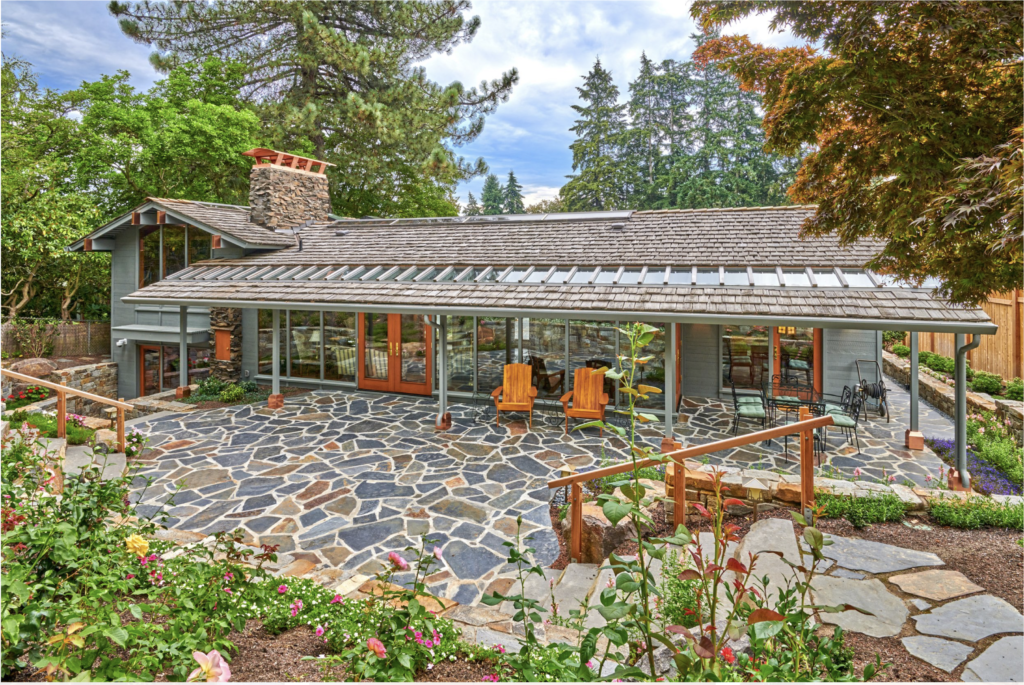
2026 ADU Cost Ranges in Seattle
What does it actually cost to build an ADU in Seattle? Here’s our 2026 guidance based on current contractor pricing:
AADU — Basement Conversion
- $80,000–$180,000 depending on how much structural and MEP work is needed
- Existing basement with headroom and separate egress: toward the lower end
- Basement requiring underpinning, new foundation drainage, or full gut: higher end
Garage Conversion ADU
- $90,000–$220,000
- Attached garages converting without structural changes: lower end
- Detached garages requiring full envelope replacement, new utilities, and significant reconfiguration: higher end
DADU — New Backyard Cottage
- 600 square feet: $260,000–$380,000
- 800 square feet: $320,000–$480,000
- 1,000 square feet (max): $380,000–$560,000
These figures include design fees, permits, and construction but exclude site preparation costs like grading or utility extensions, which vary significantly by lot.
What Does ADU Rental Income Look Like in Seattle?
The financial case for Seattle ADUs is strong:
| ADU Size & Type | Estimated Monthly Rent |
|---|---|
| Studio AADU (400 sq ft) | $1,800–$2,400 |
| 1BR DADU (500 sq ft), inner city | $2,200–$2,800 |
| 1BR DADU (600 sq ft), Ballard/Fremont | $2,500–$3,200 |
| 2BR DADU (800 sq ft), desirable neighborhood | $3,000–$3,800 |
At $2,500/month, a well-designed DADU generates $30,000/year in gross rental income. Against a $350,000 build cost, that’s a meaningful yield — and it appends directly to your property value.
ADU Financing Options
Most Seattle homeowners fund ADUs through one of three routes:
HELOC (Home Equity Line of Credit). Best for homeowners with significant equity. Rates vary; draw as you need it during construction.
Construction Loan. A short-term loan that converts to a permanent mortgage after construction completion. More complex to structure, but can be combined with a refinance.
Renovation / Renovation-Permanent Loan. Products like Fannie Mae HomeStyle or FHA 203(k) bundle purchase/refinance and renovation into a single loan. Useful when refinancing makes sense at current rates.
We partner with lenders who have specific ADU experience and can refer you to the right financing professional for your situation.
David Meade’s ADU Design Process
Here’s how we approach every ADU project at Piper Cole Architects:
- Site Analysis. We review your lot dimensions, setbacks, existing structures, utility locations, and tree inventory before any design work begins. This prevents surprises that cause expensive redesigns later.
- Programming Session. What does your ADU need to do? Who will live there? Rental unit, aging parent suite, home office, guest space? The answers shape everything.
- Massing Study. Before we draw a single floor plan, we study how the ADU sits on the lot — relationship to the main house, access, privacy, natural light.
- Schematic Design. Floor plans, exterior elevations, conceptual material palette. This is where you fall in love with (or redirect) the project.
- Design Development. Details refined, structural engineer engaged, mechanical and electrical coordinated.
- Construction Documents. Full permit drawings ready for SDCI submission.
- Permit Management. We submit, track, respond to corrections, and get your permit issued.
- Construction Administration. We visit the site during construction to verify the work matches the drawings and catch errors before they’re covered up.
Seattle Neighborhoods Where ADUs Add the Most Value
Ballard. Extremely high rental demand, walkable to transit and retail. DADUs here command top rents.
Wallingford. Central location, owner-occupant demographic trending toward ADU use for aging parents or rental income.
Columbia City and Beacon Hill. Strong rental market along the Link Light Rail corridor. ADUs within walking distance of light rail are particularly attractive.
West Seattle. Large lots relative to other Seattle neighborhoods. DADUs fit well on typical West Seattle lots.
Fremont. Tech worker demographics drive strong rental demand. Proximity to major employers adds rental value.
HB 1337 and What It Changed for Seattle ADUs
Washington’s House Bill 1337 (2023) took Seattle’s ADU-friendly policies statewide — but Seattle was already ahead of the curve. The bill prohibits cities from imposing owner-occupancy requirements, limits parking mandates near transit, and restricts HOAs from banning ADUs. For Seattle homeowners, the most meaningful impact is that ADU policy is now backed by state law, providing long-term regulatory stability that makes the investment easier to justify.
Work With Piper Cole Architects
An ADU is one of the most financially productive investments a Seattle homeowner can make — but only when it’s designed and permitted correctly. I offer a free initial consultation to every ADU prospective client. We’ll review your lot, discuss your goals, and give you an honest assessment of feasibility, cost, and timeline before you spend a dollar on design.
Call 425-753-6452 or schedule online.
Explore more:
Sources
- City of Seattle — Accessory Dwelling Units (ADUs): seattle.gov/sdci/permits/common-projects/accessory-dwelling-units
- Washington State HB 1337 (2023) — Accessory Dwelling Units: app.leg.wa.gov
- Seattle Rental Registration and Inspection Ordinance (RRIO): seattle.gov/housing/renting-in-seattle/rental-registration
- Seattle Municipal Code 23.44.041 — Accessory Dwelling Units: seattle.gov
Authoritative sources
Regulatory requirements referenced in this guide are set by the official agencies below. Rules change — always confirm current requirements with the source:
Start Here
Start Your Project
Free initial consultation, no obligation. Licensed architect serving Kirkland and the greater Seattle metro area since 2000.