
On this page
- Phase 1: feasibility, a day to three weeks
- Phase 2: design to permit submission
- Phase 3: city review, in each city’s own numbers
- What adds time before the permit
- Phase 4: construction, and why I give no number
- Staying in the house or moving out
- A sample calendar from the sourced numbers
- What to ask about the schedule before you hire
- Questions
Key takeaways
- From a signed agreement to an issued Seattle remodel permit is about 4 to 7 months on my figures: design to permit submission typically takes 2 to 4 months, and a Seattle remodel permit can be obtained in about 2 to 3 months. That total is my arithmetic, not a city figure.
- I give no construction duration. I found no official source that states one for a whole house remodel. It depends on scope, season and the builder, so get a written schedule from each builder.
- Seattle’s own page puts 75 percent of single family addition and alteration reviews at 64 days or less in City control (goal: 30), and says the total an applicant experiences is roughly twice the City figure.
- Bellevue publishes how long permits actually took, Kirkland and Mercer Island publish targets, and Medina says it gives out no timelines. I found no residential review time for Redmond or Sammamish.
- The first feasibility check is free and takes about a day. The in-depth analysis is $1,500 and takes 2 to 3 weeks. Piper Cole designs and administers construction and does not build.
Short answer: in Seattle, a whole house remodel takes about 4 to 7 months from a signed agreement to an issued permit, and construction starts after that. I do not put a number on the construction itself. No official source I found states one, and the real figure depends on the scope, the season and the builder you hire. Nobody can honestly promise you one end to end number from a web page, me included, until I have seen the house and a builder has put a schedule in writing.
Who this is for. An owner planning a remodel of $750,000 or more in Seattle or on the Eastside who wants the real calendar before hiring anyone. Piper Cole designs and administers construction and does not build, so the construction schedule comes from your builder. City figures below come from each city’s own pages, read on 13 October 2026. Confirm them with the city.
Phase 1: feasibility, a day to three weeks
The first feasibility check is free and very quick, about a day. It tells you whether the plan fits the lot, the city rules and your budget at a basic level. If you want more depth before paying for design, the in-depth analysis is $1,500 and takes 2 to 3 weeks. I suggest it when the house is old, the lot slopes or sits near water, or the scope may cross a line that changes the permit path; the guide on when a remodel counts as a new house explains the main one.
Phase 2: design to permit submission
From a signed agreement, design to permit submission typically takes me 2 to 4 months. The range is wide because it is mostly the survey, the drawings of what exists, the engineering and how quickly you settle the big choices. Structural work is a common stretcher, and the page on when a remodel needs a structural engineer covers what that adds.
Review clocks start only once an application is complete. Seattle’s residential code gives the building official 28 days after filing to say whether an application is complete (R105.7.1) and starts its 120 day decision limit from that notice (R105.7.2), and Mercer Island says its target period begins once all required documents have been received. A thin first submission costs weeks.
Phase 3: city review, in each city’s own numbers
My planning figure for Seattle is about 2 to 3 months for a remodel permit. Here is what each city publishes. The figures are not comparable: some are goals, one is a record of what happened, and some cover the first review only.
| City | What the city publishes | What it leaves out |
|---|---|---|
| Seattle | SDCI goals, effective October 1, 2025: 30 days in City control for 75 percent of single family addition and alteration reviews, which SDCI defines as expanding or renovating a house beyond what a subject-to-field-inspection permit covers. Its current 75th percentile for that category is 64 days. It says the total an applicant experiences is roughly twice the City figure. The 2021 Seattle Residential Code sets a 120 day decision limit after the application is complete, excluding the applicant’s response time (R105.7.2). | The page gives no median and no figure for whole house scopes, and no as-of date for the 64 days. |
| Bellevue | A report of permits completed 12 October 2025 to 12 October 2026. Remodel with structural change (BU): 177 permits, median 13 days, average 35. Addition to an existing structure (BR): 169 permits, median 78 days, average 143. New house (BS): 252 permits, median 175 days, average 284. First review targets: 14 days for BU and BR, 21 for BS. | It does not say how days are counted. Bellevue describes the BU permit as any structural change inside the house that adds no area, so the scopes in that line run from a moved header to opened walls. |
| Kirkland | Time to Review Goals, updated 15 September 2026: single family addition or alteration, regular review, 4 weeks for first review and 10 business days for a revision. For 2025, the average first review of 593 single family building permits took 19.3 days against an average target of 17.8. | These are first reviews, not time to issue. The 2025 average covers every single family building permit and does not say calendar or business days. |
| Mercer Island | A targets page, undated: first review 2 weeks for non-major building permits (Type 1) and 4 weeks for major ones (Type 3), 2 weeks for later reviews and 2 to 3 weeks for revisions. | It does not say which type a whole house remodel is. Its 2025 state report lists two site development permits and nothing on remodels. |
| Redmond | The residential permits page states no review time. | Ask the Development Services Center. |
| Sammamish | The permit center FAQ says staff aim to meet timeline targets and lists none. Its 2025 state report covers subdivisions and site plans. | Ask the Permit Center. |
| Medina | The FAQ says the city does not give out timelines and reviews permits first come, first served. | No figure exists to quote. |
| Issaquah | The city’s target review handout sits on pages that returned an access error to my reader on 13 October 2026, and I did not work around it. | Ask the city for the handout. |
The state’s annual permit reports do not help: Bellevue notes that the 2025 reporting requirement excludes building permits.
For Seattle, here is how I read it. Three of four reviews in the category take less than 64 City days, and one in four takes longer. SDCI says the total an applicant experiences is roughly twice the calendar days in City control. Taking that at face value, a permit right at the 64 day mark would come to about 128 days, a little over 4 months (my arithmetic, 64 x 2; SDCI does not publish a doubled figure, and its “roughly twice” is not a percentile). The slow quarter starts there. That does not make 2 to 3 months wrong: it is the figure I plan on from my own Seattle remodel permits, SDCI measures something different, and its page publishes no median, so I cannot show you the middle. Seattle may cancel an application that has no permit 12 months after filing, and the building official may extend it once, to no more than 24 months from filing (R105.10).
For Bellevue, I plan a whole house scope that adds area on the addition line, a median of 78 days or about 11 weeks, and not on the 13 day structural remodel line. My Bellevue remodel page quotes the same report as it stood a week earlier (permits completed 5 October 2025 to 5 October 2026, 76 days). The city refreshes it, so the figures move by a few days.
What adds time before the permit
None of the cities I read publish a duration for these items. Each adds a document, a reviewer or a decision, so I raise them in the feasibility check.
- Nonconforming house and substantial alteration. Seattle’s residential code lets the building official treat remodeling that substantially extends the useful life of the building as a substantial alteration, which brings egress openings, alarms and dwelling unit separation up to current rules (R107.5.1). In a flood hazard area, work worth 50 percent or more of the building’s market value triggers the flood provisions, and Seattle counts improvements over five years (R105.7.3). Bellevue’s nonconforming rules, as I read Ordinance 6906, compare the value of alterations over a three year window with the replacement value of the primary structures, which my Bellevue page covers.
- Shoreline and critical areas. A lake lot adds a second rulebook and its own review; the shoreline exemption guide and the waterfront remodel guide cover it. Kirkland’s goals say shoreline projects and projects needing a SEPA determination cannot use its high performing building, fast track or express tracks, and that a SEPA determination needs additional review time.
- Stormwater. Seattle’s 2026 stormwater code took effect July 1, 2026. SDCI’s page lists a stormwater review when you disturb more than 5,000 square feet of land or add or replace more than 750 square feet of hard surface or of building footprint, and a drainage report by a licensed civil engineer at 5,000 square feet or more of new plus replaced hard surface or 10,000 square feet or more of land disturbance. Bellevue lists a storm drainage report and a stormwater site plan among the minimum documents for an addition. See Seattle stormwater for remodels.
- Trees. Kirkland’s goals page notes that its urban forestry review is one week prior to the other goals. See the Seattle tree guide.
- Energy code documentation. Bellevue lists an energy code sheet or envelope summary among its minimum documents for an addition, and Seattle’s energy code applies the new construction rules to what you alter (R503.1). See the energy code guide.
- Structural engineering. Bellevue’s addition checklist includes a structural plan and structural and lateral calculations, and Kirkland says projects needing third-party structural review take additional time.
A complete application is considered under the building code in effect when it is filed (RCW 19.27.095). SDCI says its adoption of the 2024 Seattle codes is expected no sooner than May 2027, so a Seattle application filed now should be reviewed under the 2021 editions, but confirm that with SDCI before you file.
Phase 4: construction, and why I give no number
I give no duration for building a whole house remodel. No official source I found states one, and the pages that rank for this question give ranges that disagree with each other, and none says where its number comes from. What decides it: how much structure and how many systems you open, the season when roof, foundation or envelope work happens, the builder’s crew and subcontractor sequence, material lead times and how fast you decide.
Instead, have several builders bid the finished drawings and ask each for a written schedule. I review each against the drawings and the permit conditions and tell you where it looks thin. Bidding can run while the permit is in review, so a builder is ready when it issues.
One official duration does touch the schedule. In Seattle the authority to do the work expires 18 months from the date of issuance, and an approved renewal adds 18 months (R105.13). That is how long the permit lasts. It is not an estimate of how long a remodel takes, but a written schedule that runs close to it deserves a question.
Staying in the house or moving out
Phasing the work around a family that stays usually makes construction longer than the same job in an empty house, and a whole house remodel is usually simpler to build and price when you move out. Decide during design and ask each builder to schedule both ways. My guide to living in the house during a remodel covers the lead, asbestos and insurance questions.
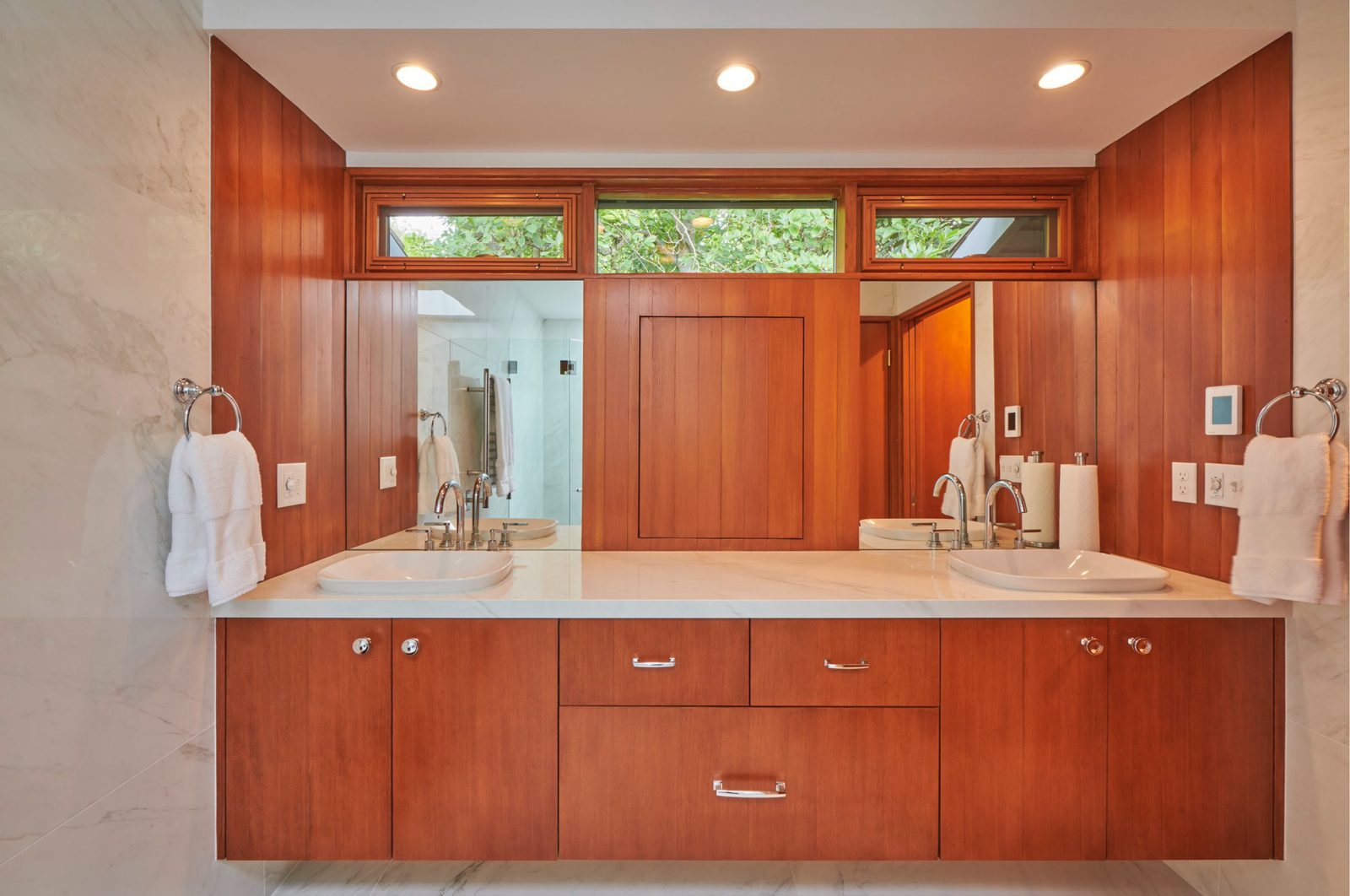
A sample calendar from the sourced numbers
This uses only the figures above, and no number where I have none. For an Eastside house, replace the review row with your city’s figure from the table.
| Step | Time | Running total from signed agreement |
|---|---|---|
| Free feasibility check | About a day | Before you sign |
| In-depth analysis, if you want it | 2 to 3 weeks, $1,500 | Adds about 2 to 3 weeks at the start |
| Design to permit submission | Typically 2 to 4 months | 2 to 4 months |
| Seattle remodel permit review | About 2 to 3 months | 4 to 7 months (5 to 8 with the in-depth analysis, rounded) |
| Bidding the finished drawings | Can run during city review | Overlaps the row above |
| Construction | Set by the builder’s written schedule | Starts after the permit issues |
The 4 to 7 months is the sum of 2 + 2 at the low end and 4 + 3 at the high end. It is a planning range, and the review row runs longer if your permit lands in the city’s slow quarter.
What to ask about the schedule before you hire
- Which city figure do you plan on? A good answer names the permit type and the city’s own report or target.
- What do you check in feasibility that could add time? Mine are the items listed above.
- Will the first submission be complete? Ask who is responsible for each document on the city’s checklist.
- Will each builder bid on finished drawings with a written schedule? Ask for it with the bid.
- Who reviews the builder’s schedule, and what changes if we stay in the house? I review it, and I ask for both versions.
About me. I have been an architect since 1996, an AIA member since 1992 and an NCARB member since 1996, and I take on 20 to 30 projects a year. The Carr residence was featured in Above The Lake and Lux magazines. My fee for design and permit is a fixed fee set by project budget and location, about $10,000 to $200,000 depending on scope.
Before you plan the calendar
Get a straight answer on your house in about a day
Send me the address, the rough size of the house and what you want to change. The first feasibility check is free. In about a day I will tell you which of the items above your house is likely to meet, and whether the $1,500 in-depth analysis, 2 to 3 weeks, is worth doing next.